| View previous topic :: View next topic |
| Author |
Message |
SpreadTheTed
Joined: 18 May 2021
Posts: 26
Location: Rhode Island
|
 Posted: Tue Jul 13, 2021 12:26 pm Post subject: External sump? Posted: Tue Jul 13, 2021 12:26 pm Post subject: External sump? |
 |
|
| Hey all, was looking at my oil pump and noticed this bolt and what appears to be a freeze plug, I was wondering if I could potentially use these as an outlet and inlet to run an external oil tank or potentially run a dry sump though them? I'd also love to see other people's dry sump solutions/who still offers one. |
|
| Back to top |
|
 |
924RACR
Joined: 29 Jul 2001
Posts: 9060
Location: Royal Oak, MI, USA
|
| Posted: Tue Jul 13, 2021 8:47 pm Post subject: |
|
|
My understanding is that this is indeed where Porsche put in the fittings for an external dry sump. Well, at least, this would be the inlet from the high-pressure pump - basically gut the pump and thread/weld a fitting on to accept the output from the external high-pressure pump. Suction is of course handled differently, with pickups in the pan going directly to the external suction stages of the pump.
The stock oil filter port would be closed off, mount an external filter housing at a more suitable location away from the header.
Though I wouldn't bother, unless you're building an actual Prod or GT car. Useless for street, and not necessarily ideal even for the track, though they'll cost a lot of money and effort to install.
I run a dry sump on my prototype racecar (not the '79 NA), but it regularly reaches and exceeds 2.0 g's in the corners. Accusump is preferable for the 924 ITB car...
_________________
Vaughan Scott
Webmeister
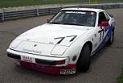
'79 924 #77 SCCA H Prod racecar
'82 931 Plat. Silver
#25 Hidari Firefly P2 sports prototype |
|
| Back to top |
|
|
SpreadTheTed
Joined: 18 May 2021
Posts: 26
Location: Rhode Island
|
| Posted: Wed Jul 14, 2021 12:53 pm Post subject: |
|
|
| I was really just hoping to run an external tank using the original oil pump, basically have the oil pan pick scavenge to a tank, and then draw from the tank to feed the oil system. Ii think that might be called a hybrid sump but I'm not sure? Iits going to be a widebody track car with 9 inch wheels all the way around so pulling Gs is a bit worry some, also it's for a 931 |
|
| Back to top |
|
|
924RACR
Joined: 29 Jul 2001
Posts: 9060
Location: Royal Oak, MI, USA
|
| Posted: Wed Jul 14, 2021 8:28 pm Post subject: |
|
|
That would basically be all the same work as a full dry sump - if you're willing to tackle that, I'd just go the whole way.
Biggest effort seems to me will be in fabricating the pan...
_________________
Vaughan Scott
Webmeister
'79 924 #77 SCCA H Prod racecar
'82 931 Plat. Silver
#25 Hidari Firefly P2 sports prototype |
|
| Back to top |
|
|
TJC
Joined: 04 Apr 2010
Posts: 828
Location: Northwestern-ish Arizona, USA
|
| Posted: Thu Jul 15, 2021 12:48 am Post subject: |
|
|
Ask yourself, did Porsche do it this way on their own 924 based race cars? What kind of cornering forces were those cars subject to?
_________________
'95 BMW 318i/5 ..."Pearl"
'87 Porsche 944 NA... "Liebchen"
'02 Porsche Boxster..."Sunbeam"
'04 BMW X3..."Xander"
Still on the Prowl!
www.ttrs1.com |
|
| Back to top |
|
|
MikeJinCO
Joined: 08 Jun 2010
Posts: 1245
Location: Maysville, Colorado
|
| Posted: Thu Jul 15, 2021 3:11 am Post subject: |
|
|
Time to ask Scott Sanda what the 933/GTR sump looked like. I believe you would need a second pump because the accumulator tank is not a pressure tank as the dry sump suction pump(s) can easily suck air. Someone in UK(Piper?) can do a full dry sump system at about $2500, I believe Quik Nip in his LSR car had one.
I did some experiments with a sump and g forces last winter. Assuming that water is a similar viscosity to hot oil at 1g it is like tilting the pan 45 degrees. The result is that at 1g and a stock pan due to the motor being installed at approximately 40 degree angle on a right hand turn the oil pump is well exposed to the air and on a left turn the crank will be dragging thru the oil. I built a baffle plate similar to the original Mittlemotor one. They have a new crankscraper/baffle at over $600 and Crankscrapers.Com has a similar one at a similar price. My baffle plate cost some time(about 5 pattern iterations)and $50 for welding it in, with an Accusump it will have to do. The intent of the baffle plate is more to reduce the oil turbulence in the pan and crankshaft drag than keep the pump submerged. I''ll repeat my experiments and report back. It appeared to me that relocating the oil pick from the low side of the pan to the bottom would help significantly.
In our vintage racing group, if you don't have a dry sump, an Accusump is in almost every car.
_________________
Mike
'67 MG Midget Dp
'71 Ocelot Dsr Kawasaki 1000(under rebuild) |
|
| Back to top |
|
|
Fifty50Plus

Joined: 28 Feb 2008
Posts: 1422
Location: Washington DC area
|
| Posted: Thu Jul 15, 2021 3:34 am Post subject: |
|
|
On my IT-B 924 race car, I have an AccuSump and a crank scraper. I also capture oil pressure data for the entire race and never see a drop in pressure; always at 75+.
The factory D-Prod 924s had a full dry sump system with external pumps while my 911 race car had an internal combo (pressure and suction pump) dry sump system.
AccuSump is quick, easy, relatively inexpensive and reliable.
_________________
1979 924 NA race car H-Prod SCCA
1982 924 NA race car - Sold
1981 924 Turbo sold
1982 924 Turbo sold
1972 911 E race car - traded for Cayenne Diesel
1975 914 1.8 Building for H-Prod SCCA |
|
| Back to top |
|
|
Cedric

Joined: 27 Aug 2004
Posts: 2801
Location: Sweden
|
| Posted: Thu Jul 15, 2021 3:35 am Post subject: |
|
|
There's a dry sump oil pan etc for sale by a rally guy over here , not sure if its still available. Could maybe be something?
_________________
1980 924 Turbo
www.instagram.com/garagecedric/ |
|
| Back to top |
|
|
924RACR
Joined: 29 Jul 2001
Posts: 9060
Location: Royal Oak, MI, USA
|
| Posted: Thu Jul 15, 2021 4:32 am Post subject: |
|
|
We likewise use the accusump and scraper in our ITB car, which can readily hit 1.6g lateral sustained. Durability is well above average for race motors.
Also note that, if you're experiencing negative g's, the dry sump won't help, only the accusump will. My P2 with the dry sump will suck air if I stay in it at Grattan Raceway, a track nearby in Western Michigan where it catches air twice a lap. Fun track, but hell on the motor.
_________________
Vaughan Scott
Webmeister
'79 924 #77 SCCA H Prod racecar
'82 931 Plat. Silver
#25 Hidari Firefly P2 sports prototype |
|
| Back to top |
|
|
peterld
Joined: 10 Dec 2006
Posts: 981
Location: Noosa Heads QLD Australia
|
| Posted: Thu Jul 15, 2021 10:56 pm Post subject: |
|
|
So guys.....what exactly is an Accusump? My understanding is that it is a supplementary oil container plumbed into the sump. How does it work/ where is it located/ where does it fit onto the sump/ is it under pressure?
_________________
80/81 932/8 ROW |
|
| Back to top |
|
|
Fifty50Plus
Joined: 28 Feb 2008
Posts: 1422
Location: Washington DC area
|
| Posted: Thu Jul 15, 2021 11:29 pm Post subject: |
|
|
Peter,
Normally, all the oil from the pump goes out to the filter, then back in to block to be distributed throughout the engine. With an AccuSump, you remove the filter, install an adaptor that has and outlet and inlet (usually dash 12 fittings). You take the outlet hose, install a one way check valve and then a T fitting. From the T you route one hose to the AccuSump (a 3 quart cylinder with a piston) and the other hose to a remote filter (and cooler if you want) and then back to the inlet side of the adaptor.
When you first install the system and start the engine, the oil pump sends oil to the AccuSump and fills it by pushing the piston back and filling the cylinder. The back side of the piston is an air chamber that gets compressed to the pressure of the oil coming from the pump. On the AccuSump there is a manual or electric (if you choose - connected to the ignition key) valve that you close just before you turn off the engine. This valve traps the 3 extra quarts of pressurized oil in the AccuSump until you next open the valve (or turn on the ignition key).
The check valve is there to keep pressurized oil from flowing back towards the pump when it is cavitating (sucking air because the pickup is not in oil when there is lateral G forces on the sump).
The manual valve on the AccuSump can be used to open for a few moments before you try to start the engine to pressurize the engine bearings. If you forget to close it all the oil in the AccuSump will flow through the filter, cooler and back into the engine shortly filling the sump with 3 extra quarts of oil.
The beauty of the AccuSump is that when cornering or braking forces slop oil away from the pickup and the pump cavitates, the check valve closes and the AccuSump pushes its 70-80 lbs of oil pressure through the filter, cooler and into the engine thus maintaining good pressure to the bearings. When the sump again has oil in it, the pump sucks oil, pushes it through the check valve (thus refilling the AccuSump) and on to the filter, cooler and engine bearings.
Genius!
_________________
1979 924 NA race car H-Prod SCCA
1982 924 NA race car - Sold
1981 924 Turbo sold
1982 924 Turbo sold
1972 911 E race car - traded for Cayenne Diesel
1975 914 1.8 Building for H-Prod SCCA |
|
| Back to top |
|
|
MikeJinCO
Joined: 08 Jun 2010
Posts: 1245
Location: Maysville, Colorado
|
| Posted: Fri Jul 16, 2021 12:00 am Post subject: |
|
|
Accusump is about 4-5" dia cylinder with a piston that takes air pressure on one side and oil on the other and holds 1 to 3 quarts or oil. It has either an electric or manual valve that feeds to normally a return from an oil cooler with a check valve to prevent back flow to the sump. You put it anywhere you can find room for it, typically in our cars in the passenger compartment( mine is in the rear seat pocket behind the not installed passenger seat a -10(5/8") hose that goes along the passenger side of the torque tube tunnel with a manual valve. Typically you would like to keep the hose as short a possible. Mine is routed into the passenger side(LHD)inside front wheel well and into the cooler return line(that is the hard part to install). It is not a pretty installation, the angled motor and header leaves very little room in the engine compartment.
For operation you put about 7-10psi in the air side then over fill the sump by the capacity of the unit open the valve and crank up the motor. The oil pump fills the cylinder and the air compresses to about 75 +-psi and then I close the valve(manual). About a minute before I go out on the track I open the valve while running and try to remember to shut the valve before I shut the motor off. If the oil pressure drops for any reason while running the air pressure continues to feed oil to the motor. Using an electric valve it can be set up to opened on pressure drop or to pre-oil the motor for startup.
From what I have read the system was invented in the 1970's era by the drag racers to pre-oil their motors for start up. Cost runs about $200-250 for the unit, electric valve maybe another $100. Installation is a whole other issue, any fluids in the driver space need to be in steel wire wrapped hoses and the -10 size fittings can run $25+- each and hose maybe $10 per foot. It gets expensive, I used Earls(Holley) fittings and hose, there are slightly cheaper alternatives, but for the slightly higher cost the probably higher quality and greater availability were worth it.
_________________
Mike
'67 MG Midget Dp
'71 Ocelot Dsr Kawasaki 1000(under rebuild) |
|
| Back to top |
|
|
TJC
Joined: 04 Apr 2010
Posts: 828
Location: Northwestern-ish Arizona, USA
|
| Posted: Fri Jul 16, 2021 1:12 am Post subject: |
|
|
Getting back to the original question even though the OP failed to answer the questions I posed, a proper dry sump system is often comprised of "stages" of pump design meaning that there is more than one suction stage and more than one pressure stage as opposed to a single pump that sucks oil out of the pan and redistributes through pressure to other points of the engine for lubrication. Apart from the obvious reasons for needing a dry sump multi stage oiling system...some of which have been lightly touched on here...is the fact that one can greatly increase the volume of oil used in the system and also store that oil in a much more convenient and "safer" or protected area of the vehicle. It also allows the use of much larger oil coolers and a greater "volume" of oil to pass through much larger oil lines/hoses than a conventional stock single stage pump does. This in and of itself lends a very important task of providing the engine with a cooler supply and continuous supply of fresh oil. A great deal of design work must be employed in creating a proper dry sump lubrication system as not only does one need to carefully consider a proper and efficient design of the engine sump and baffling characteristics, but also the proper design and baffling of the dry sump tank, location of same, oil line routing including intregation of a proper cooler and perhaps even remote oil filter(s) and even fluid dynamics inside the oil lines themselves to ensure that a constant volume of oil is flowing without creating such disturbances to cause disruption or churning of the oil itself...somewhat similar to cavitation issues in an oil pump. Oh, and then there's the matter of proper "breathing" to consider.
These are just a couple of the finer points to consider when thinking about designing a dry sump system for a car. And those parameters can change depending on the race car itself. Having been deeply involved with Sprint and Midget dirt track/pavement cars as well as a variety of road race and endurance racing type vehicles for 50 some years I have had the opportunity to witness the differences in design and purpose of proper dry sump lubrication systems and although I am not an expert by any means I have the greatest respect for those in the field who are. To make an engine live under such extreme conditions is magic!
I don't think the idea of using the stock oil pump will work as you had hoped.
Cheers! 
_________________
'95 BMW 318i/5 ..."Pearl"
'87 Porsche 944 NA... "Liebchen"
'02 Porsche Boxster..."Sunbeam"
'04 BMW X3..."Xander"
Still on the Prowl!
www.ttrs1.com |
|
| Back to top |
|
|
Fasteddie313

Joined: 29 Sep 2013
Posts: 2595
Location: MI
|
| Posted: Fri Jul 16, 2021 11:48 am Post subject: |
|
|
So I could basically interrupt my 931 oil cooler line with a check valve and a Tee, put the accusump on the Tee, and that’s it?
Do you think it would fit behind the front fender like where the charcoal canister and automatic antenna stuff is on the drivers side?
Put the valve right there behind the fender and just reach behind the wheel to open it?
Do you just open the valve very slowly so you don’t starve the engine of oil while it is filling for the first time?
_________________
80 Turbo - Slightly Modified |
|
| Back to top |
|
|
924RACR
Joined: 29 Jul 2001
Posts: 9060
Location: Royal Oak, MI, USA
|
| Posted: Fri Jul 16, 2021 8:38 pm Post subject: |
|
|
| Fasteddie313 wrote: | | Do you just open the valve very slowly so you don’t starve the engine of oil while it is filling for the first time? |
Yes, absolutely; in our ITB car, it's on the passenger floor side with a manual valve. We open the valve for oil changes, and then refill carefully (with some revs, not at idle, to improve flow) after restarting.
_________________
Vaughan Scott
Webmeister
'79 924 #77 SCCA H Prod racecar
'82 931 Plat. Silver
#25 Hidari Firefly P2 sports prototype |
|
| Back to top |
|
|
|

 FAQ
FAQ Search
 Memberlist
 Usergroups
 Register
 Profile
 Log in to check your private messages
 Log in
 924 FAQ (Technical)


