 |
924Board.org
Discussion Forum of 924.org
|
| View previous topic :: View next topic |
| Author |
Message |
Chrenan

Joined: 15 Jan 2003
Posts: 3903
Location: Canada
|
 Posted: Sun Apr 02, 2006 12:48 am Post subject: Posted: Sun Apr 02, 2006 12:48 am Post subject: |
 |
|
Nope, no adjustable cam gear. I suppose I could put one on later if I wanted, but for now, stock cam gear. It's going to be a pretty basic setup to start with, once that is all OK, maybe I will start experimenting a bit more (fuel injection, ignition, cam timing, etc etc).
_________________
1987 951 - M193 Version for Japan |
|
| Back to top |
|
 |
Tigger937

Joined: 11 Apr 2004
Posts: 919
Location: PCA Milwaukee Region
|
| Posted: Sun Apr 02, 2006 1:23 am Post subject: |
|
|
| Chrenan wrote: | | It's going to be a pretty basic setup to start with, once that is all OK, maybe I will start experimenting a bit more (fuel injection, ignition, cam timing, etc etc). |
Good sound planning. Always best to start with the basics and go from there, one step at a time.
_________________
1981 931 (Concours)
1982 931 (Daily Driver)
"Think outside the box" |
|
| Back to top |
|
|
John Brown

Joined: 07 Nov 2002
Posts: 903
Location: Leesburg VA
|
| Posted: Sun Apr 02, 2006 8:16 am Post subject: |
|
|
| Paul wrote: | I've always wondered if this hole was for a mechanical fuel pump for the carb version of this motor....
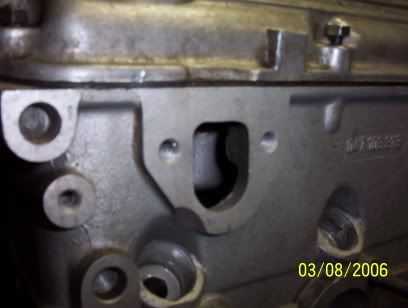 |
Yes
_________________
John
80 931 - #931 44Cup
99 Escalade - tows track cars
gone but not forgotten: original 924.org car - 82 |
|
| Back to top |
|
|
John Brown
Joined: 07 Nov 2002
Posts: 903
Location: Leesburg VA
|
| Posted: Sun Apr 02, 2006 8:21 am Post subject: |
|
|
| Chrenan wrote: | | ... and stronger springs ... |
Where did you source the valve springs?
_________________
John
80 931 - #931 44Cup
99 Escalade - tows track cars
gone but not forgotten: original 924.org car - 82 |
|
| Back to top |
|
|
Chrenan
Joined: 15 Jan 2003
Posts: 3903
Location: Canada
|
| Posted: Mon Apr 03, 2006 12:18 am Post subject: |
|
|
All head work was done by European Motorworks (formerly Eurorace), they are at:
1 800 722 8678
13224 Prairie Avenue
Hawthorne, California, U.S.A. 90250
www.europeanmotorworks.com
The headwork involved:
44mm Stainless Steel Intake Valves
35mm Stainless Steel Exhaust Valves
Port and Polish
Special Racing Guides
RaceSport Valve Springs and Retainers
Stage I cam 233x470
_________________
1987 951 - M193 Version for Japan |
|
| Back to top |
|
|
Chrenan
Joined: 15 Jan 2003
Posts: 3903
Location: Canada
|
| Posted: Mon Apr 03, 2006 12:27 am Post subject: |
|
|
Taken from European Car article by Richard Holdener, titled 924 BOLT ON BONANZA THE SEQUEL – Getting something for something. Thanks to member eturbo924 for keeping this aritcle on his site. Details some of the results I hope to see from the head work.
--------------------------------------------------------------------------------------
When we last left our hero, the Yellow – bellied Sapsucker – a description coined from the combination of a brilliant exterior hue and an utter lack of performance – its 2.0 liter motor had wheezed its way to nearly 86 rear – wheel hp. The Dynojet chassis dyno had verified our worst fears: Porsche’s (VW/Audi) first effort at water cooled performance had left a little to be desired. Not only did the stock motor lack any semblance of spirited motivation, but the SOHC (maybe SOB is a better acronym) defied all manner of speed equipment. A look back at the May issue of European Car shows that we threw just about every little bolt on bit at the motor with absolutely no affect whatsoever. About the only way we were able to coax more power from the Porsche power plant was to bump up the initial timing from the ludicrously low specs of 10 degrees after top dead center to 0 degrees. The extra timing helped in the horsepower department, upping the maximum hp from 82 at the rear wheels to – are you read for this?- a full 86 ponies. Not a lot, but since this was our first effort at increasing the power, we were optimistic about the rest of the bolt-on’s.
Little did we know that the heartbreak and disappointment were only things waiting for us in the possessed little Porsche. All the bolt-ons we tried made a grand total of 0 extra horsepower. That’s right, absolutely nothing. Did we give up in frustration? Not on your life. After coming up empty in our search for added horsepower, we decided that we must have been looking in the wrong place. If all the minor add-ons weren’t helping the motor flow more air, we needed to dig a little deeper to find the hidden power. Since our inefficient air pump had to have a restriction somewhere, we figured the cylinder head was the next logical place to look. If the intake, exhaust and throttle body don’t improve power, maybe the cylinder head just wouldn’t allow the motor to breathe any more air. It doesn’t matter how well the intake and exhaust flow air into and out of the cylinder head if the cylinder itself isn’t up to the task. Knowing we wanted more than just 924 performance, we contacted our friends at Eurorace just what was available for our little 2.0 liter.
Eurorace had just what we needed in the form of its big–valve head for the 924. The head featured larger valves, "extra-lift" valve springs and even some minor porting to dramatically improve the air-flow characteristics of the intake and exhaust ports. Knowing that the only way to take full advantage of the added air flow was to keep the valves open longer, we decided to opt for the performance cam that comes as part of the bib-valve/head package offered by Eurorace. The cam is mild enough to still be compatible with the factory fuel injectors yet sports a healthy 0.475 lift and 249 degrees of duration. We noticed a slightly lumpy idle, but nothing that decreased the drive-ability or oddly enough , the mileage figures. The big-valve cylinder head/cam package comes complete, right down to the cam installed and properly adjusted. The cam and head are literally a bolt-on.
Not wanting to stop at the big valve head and cam combo, we opted to further improve the flow of the aluminum head by having the gang at Extrude Hone take a pop at ‘em. The Extrude Hone porting greatly improved the flow characteristics of the head, but was the added flow and new cam going to be worth any extra power? We had high hopes, but our hopes had been high before, only to be crushed by the reality of the Dynojet dyno.
Before we could take the car back to Kenne Bell for the dyno testing, we had to swap the old head and cam for the newly ported Eurorace pieces. Removing the stock Porsche head allowed us to take a look at the piston tops and cylinder walls in the stock short block. Though the pistons had their fair share of carbon built up – something that would be expected with a high mileage motor – the cylinder walls seemed smooth, round and devoid of any ridge at the top of the bore. A ridge at the top of the cylinder above the surface where the piston rings ride would indicate excessive cylinder wear – as the compression test on our motor also indicated, this was not the case. We were glad to see that the short block appeared in decent shape, as we still had a good bit of dyno testing to reach our horsepower goals. After cleaning the deck of any residual head gasket material, we installed the new big valve head with a fresh gasket set from Eurorace. The head was torqued according to the factory manual; the intake, exhaust and accessories were installed before our trip back to the dyno.
The first time we stepped on the throttle, we could feel the extra power from the new head and cam combo – it was nice to finally feel some oomph. The motor seemed to be a bit snappier, right of idle and all the way to redline. While we expected extra power when the motor came on the cam, we didn’t expect the increase in low-speed torque. How much extra power did the head and cam make? There was only one way to find out. Once the car was hooked up to the chassis dyno at Kenne Bells, we ran the motor from 3000 rpm all the way past red line in third gear, just like the first series of tests. The power was better everywhere, from 3000 rpm all the way past 5500 rpm, where the dyno indicated that the motor now made 101 rear-wheel horsepower, a jump of some 15 hp from the previous test. Since we were running the test with an Extrude Hone ported intake and exhaust manifolds, we speculated that the exhaust system itself might again be a potential flow restriction. While we had added a Pacesetter muffler during the original test, we did not change the diameter of the exhaust system. Since we were now making more power, a free flowing exhaust becomes even more important. We increased the exhaust tube diameter from 2 to 2 ¼ inches and added one of the Exhaust Tech’s new mufflers. To complete the exhaust system, we included on of the new Exhaust Tech resonator tips. While the tip adds very little in the power department, it does improve the sound quality and finishes off the muffler nicely.
The next dyno test verified that the original exhaust and pacesetter muffler had been restrictive. The new head and cam were able to breath better, increasing the rear-wheel horsepower to a maximum of 107 at 6000rpm. The midrange torque had also increased by 5 to 7 lbs-ft. The fact that the engine made peak power at a higher rpm indicated that the exhaust was choking off the head and camshaft. Now we were starting to get somewhere. With the engine finally running like a good normally aspirated 2.0 liter should, we thought it might be a good idea to try some of the original bolt-ons on the new engine configuration.
Unfortunately we ran across the very same scenario we had last time. The large, single blade throttle body, the Jacobs ignition, the cold air and the K&N filter all made no difference in power. The single blade throttle body did redeem itself during the drive home from the dyno by making a dramatic improvement in (of all things) low speed drive-ability. While common sense would dictate that a larger opening should kill the velocity entering the intake, and therefore decrease drive-ability, the opposite was true on our test car. Maybe the sucker’s possessed. The Jacob’s ignition also showed its worth by increasing both throttle response and fuel mileage by nearly 2 mpg, making it a worthwhile piece of speed equipment.Since we had run up against another horsepower wall, we too a long hard look at the fuel injection. When Porsche upped the power by adding a turbocharger, one of the accessories they changed was the air door for the fuel injection. They must have known that the relatively small opening would present a problem when trying to go beyond the 125 (flywheel) hp range. Now, we could have done some extensive research, or even trial and error testing to find a suitably air door assembly to match our increased power output, but time (along with patience) was something we had very little of.
Since the air door seemed to be the new restriction, and no suitable substitute could be located, we made a decision to scrap the fuel injection in favor of a set of tried and true dual side draft carbs. We had a pair of 40mm Dellortos from an old dual Magnacharger kit for a small-block Chevy. The carbs were taken up to Eurorace, where the appropriate idle, main and air corrector jets were installed for our mild 2.0L application. Eurorace also offers a dual side draft setup for the 924, so we borrowed one of its manifolds for our dual Dellortos.
The carbs went on without a hitch. Since we were going to be converting the 924 back to the original fuel injection after the dyno testing, we simply left the injectors in their respective holes in the cylinder head. This way, we didn’t have to purchase special plugs to seal the holes when using the carbs. Though it was a tight fit, the carbs could be installed with the injection still in place. We then swapped out the high-pressure fuel injection pump for a low-pressure carb version and away we went. The first drive brought some real smiles to our faces. Though there was some loss in low speed power- not surprising considering the tremendous difference in intake runner length between the two systems- the rush from about 300 on up more than made up for the slight loss at the low end. The car had finally felt like it had power.
Our next trip to the Kenne Bell didn’t exactly go as planned. What we were counting on was a quick dyno test, some 120 rear-wheel hp figures, and then we could wash our hands of the whole 924 fiasco. The reality was that not only didn’t the motor make anywhere near the power it had on the last dyno session, but it felt like it was breaking up badly from 4000 rpm on up. A check on the fuel pressure gauge revealed a major amount of fluctuation, between 2 and 5 LB, not exactly a desirable situation. While the fuel problem puzzled us, the miss in the motor seemed more like ignition problem. The car was removed from the dyno, as further testing was useless until the problems could be rectified. The distributor was removed and taken to a local distributor shop for a quick check. The ignition culprit was found to be a bent shaft. The shaft was straightened and re-tested on the distributor machine with positive results. With the distributor problem taken care of, we turned our attention to the fuel system. We had run the fuel system with a return line back to the tank to minimize vapor lock. The return line had a small orifice ( a 1 to 2 mm fuel jet) to restrict the fuel and allow the system to build pressure. It seems that the bleed orifice was allowing too much fuel through wide-open throttle and the floats in carbs were running dry. A quick fix was to pinch off the return line which alleviated the fuel pressure surging. Unfortunately, due to the unanticipated length of our repairs, and the busy schedule of the Dynojet, we were unable to retest the new configuration on the dyno. We did find a couple of willing participants to engage in the time-honored tradition of acceleration tests. We are happy to say that the dual carb Porsche was actually able to best both a new Honda Civic EX (125 hp model) and even better, a 924 Turbo with an after market exhaust. The Porsche easily motored past the Honda in the stop light grand prix, but to our surprise, ran two car lengths past a 924 turbo all the way to triple digits. Not exactly empirical test data, but we did seem to reach our goal of 924 Turbo performance with minor bolt-ons albeit with major headaches.

_________________
1987 951 - M193 Version for Japan |
|
| Back to top |
|
|
seanski44

Joined: 13 Mar 2006
Posts: 532
Location: Nottingham UK
|
| Posted: Mon Apr 03, 2006 1:54 am Post subject: |
|
|
haven't read all the thread, but that last post really interested me. The mod on my 924 n/a head is some material inserted in the intake side of the standard cyl head to smooth the air flow. Rather then hijack this thread I'll start a new one...
_________________
1998 BMW Z3 2.8 arctic silver & red
1981 168HP 931 S2 blue/tan leather - SOLD 
1985 121HP 924 2.0l na modded - SOLD!
1992 968 lux SOLD
1989 944 2.7 lux SOLD |
|
| Back to top |
|
|
Tigger937
Joined: 11 Apr 2004
Posts: 919
Location: PCA Milwaukee Region
|
| Posted: Mon Apr 03, 2006 4:41 am Post subject: |
|
|
| Chrenan wrote: | Taken from European Car article by Richard Holdener, titled 924 BOLT ON BONANZA THE SEQUEL – Getting something for something. Thanks to member eturbo924 for keeping this aritcle on his site. Details some of the results I hope to see from the head work.
--------------------------------------------------------------------------------------
The reality was that not only didn’t the motor make anywhere near the power it had on the last dyno session, but it felt like it was breaking up badly from 4000 rpm on up. A check on the fuel pressure gauge revealed a major amount of fluctuation, between 2 and 5 LB, not exactly a desirable situation. While the fuel problem puzzled us, the miss in the motor seemed more like ignition problem. The car was removed from the dyno, as further testing was useless until the problems could be rectified. The distributor was removed and taken to a local distributor shop for a quick check. The ignition culprit was found to be a bent shaft. The shaft was straightened and re-tested on the distributor machine with positive results. |
How does a distributor shaft get bent?
_________________
1981 931 (Concours)
1982 931 (Daily Driver)
"Think outside the box" |
|
| Back to top |
|
|
Chrenan
Joined: 15 Jan 2003
Posts: 3903
Location: Canada
|
| Posted: Mon Apr 03, 2006 9:14 am Post subject: |
|
|
No idea, maybe someone dropped it?
_________________
1987 951 - M193 Version for Japan |
|
| Back to top |
|
|
Chrenan
Joined: 15 Jan 2003
Posts: 3903
Location: Canada
|
| Posted: Sun Apr 09, 2006 11:26 am Post subject: |
|
|
The UFO has landed...

Water pump mounted. Interesting note, the rear upper alternator mount is the same on the early and late engines (1977 vs 1980), but the front mount is different. I've used the late style mount here as I will be re-using the alternator from my 1980 engine until it decides to die.

_________________
1987 951 - M193 Version for Japan |
|
| Back to top |
|
|
steeny
Joined: 24 Nov 2005
Posts: 319
Location: Brisbane, Australia
|
| Posted: Mon Apr 10, 2006 10:09 am Post subject: |
|
|
wow, those alternator mounts are completely different to the ones on my '78.
that would explain why the alternator bushes i brought from the US dont fit my car
hmmm... guess you have to learn some things the hard way.
_________________
1978 924 N/A
she's gone..... |
|
| Back to top |
|
|
Ozzie

Joined: 12 Mar 2005
Posts: 4448
Location: Townsville, Qld. Australia
|
| Posted: Mon Apr 10, 2006 10:26 am Post subject: |
|
|
When I get my shed back Jason (soon I hope) I will chase up those urethane bushes. I think TJ924 wants some as well.
_________________
Porsche 924 1984 (UK import) NA
Its AUTO and its BLACK
Montego Black on black/red
Engineer of Electro/Mechanical Systems Maintenance |
|
| Back to top |
|
|
tj924

Joined: 15 Jul 2004
Posts: 957
Location: Toowoomba, Queensland, Australia
|
| Posted: Mon Apr 10, 2006 12:31 pm Post subject: |
|
|
| Ozzie wrote: | | When I get my shed back Jason (soon I hope) I will chase up those urethane bushes. I think TJ924 wants some as well. |
You bet!
I did the same thing as Steeny & got a set of alternator bushings based on part numbers posted on the board. After I got them & found them to be the wrong ones, I found the correct part number in the PET but have been unable to source any.
_________________
TJ
Silver '82 924 NA 5-Speed Manual |
|
| Back to top |
|
|
D Hook

Joined: 02 Nov 2002
Posts: 3158
Location: Omaha, NE
|
|
| Back to top |
|
|
Mike924

Joined: 12 Aug 2004
Posts: 2601
Location: IoW UK
|
| Posted: Wed Apr 12, 2006 5:02 pm Post subject: |
|
|
Too Broke Back Mountain! 
_________________
1985 Porsche 924 'Lux', Kalahari Beige (my ex)
1993 Porsche 968 Coupe, Midnight Blue, 6 spd
'There is no substitute for a little grease under your fingernails.' - Chrenan, 924board.org |
|
| Back to top |
|
|
|
|
You cannot post new topics in this forum
You cannot reply to topics in this forum
You cannot edit your posts in this forum
You cannot delete your posts in this forum
You cannot vote in polls in this forum
|
Powered by phpBB © 2001, 2005 phpBB Group
|

 FAQ
FAQ Search
 Memberlist
 Usergroups
 Register
 Profile
 Log in to check your private messages
 Log in
 924 FAQ (Technical)


